Thursday, July 21, 2011

New Items in the Showroom in July

By: Andrea Schuch

It's that time again to see all the great new things in our showroom. I know sometimes things get lost in here because there is so much to look at, but it's important to know what's available so when you have a client, your artillery is packed!

The best (in my opinion) new item this month as got to be the new Theodore Alexander table. The quality is so good and designed so well. It has a little bit of a transitional flare but can fit into many settings. I was very skeptical of this table when seeing it in the catalog - the picture in the catalog shows very brassy but in person, this table is an elegant version of the transitional style with legs that are not brassy but deepened in tone.


Also from Theodore Alexander is this fun tray. It makes me think of my childhood a little bit. Ever have a thumb war? Well this tray is like having two! The handles on either side are styled as if the were in the midst of a war. Maybe I'm just on a Theodore Alexander kick, but why not? They have such wonderful pieces.
Another great new piece is this lamp. Although it looks small in the picture, it actually measures 18.5" wide and 25" high. The shade on it is very nice and the price isn't bad either! From the same manufacturer, we received several candlesticks that you might want to check out also! This brass lamp from them is also darling and will be great on a desk.


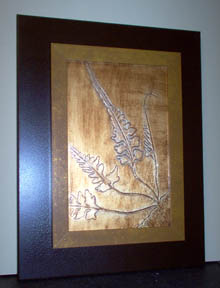
We also received a few pieces of artwork, shown here is the Abstract Fern from Paragon. Paragon really has some amazing pieces. We have received a few shipments from them but they are relatively new in our showroom. Definitely make time to check out their catalog next time you are in the showroom.

Thursday, July 7, 2011

Organize!

By: Andrea Schuch

I was recently inspired to get my house, office and car organized. I like the way an organized house (and everything else) looks but with two kids at home and a husband overseas, there is only so much time and unfortunately, it doesn’t go towards cleaning. Now that my kids are moving around (Henry took his first steps recently), those little hands gravitate towards anything within reach. All the more reason to put everything where it belongs and not have things laying around waiting to be pulled on top of one’s head. I took the long weekend to clean up and make sure everything was washed, vacuumed and dusted before I took off for my in-laws for the week. This activity was very freeing and felt like I was taking a load off my shoulders. The only problem is that for everything I cleaned up, I saw ten more things to clean or to pack up that I didn’t want to clean anymore. This made me think that if there was less “stuff” around; I could really appreciate the nicer things more and have more brain power to take care of the things that really matter. I guess I’m just going through a purging phase where I feel like I need to get rid of all of it…
I was recently talking to a designer who said she feels that if a person is organized, they can accomplish more and better quality work. I really feel this way in my life and definitely notice that I feel like I’m getting more done – this may not actually be the case but it definitely makes me feel better. Another designer, in a completely different set of circumstances, told me that she needed to have a clear space to clear her mind. While two years ago I would have thought nothing of it, the post-baby me surely finds respite in a clean desk and neatly stacked and organized papers.
So although my desk doesn't show of it, my home surely does this week and here are a few tips I have to share:

1. Deadlines! Without a deadline, things never get done in my house. My husband would agree that I'm a 90% person. I power through the first 90% and then float around for the last 10% of any project. With a deadline, That 10% floats a little faster.
2. Focus on what you really want to see. I've decided that I only want to see the nice things. I'm packing up everything else so all that's left (besides the kid's toys) are things that I love to see. It really relaxes my mind and lets me focus on the things that I really need to.
3. Take everything apart and put it back together. I know this sounds like a lot of work but for me, this is really what it takes. If I take everything apart, I might find a great place for something that I didn't see before. As designers, we often use this with clients but I don't always think to do it for myself.

Translating this to helping clients is really what we are great at in the design industry. Usually we can spot a few things to change when walking into a client's home - the trick is to get the client to see it too.

What is your favorite organizing trick?

Monday, June 27, 2011

Price Is An Issue - It's Not The Issue

By: Andrea Schuch

This is our second article from Colleen this year, which should tell you she knows what she's talking about! This is an issue that I think many designers have problems with - how to price what they are selling (including themselves). This article will give insight into what you should sell to whom and how pricing is determined. Read on for insight, and maybe a little self reflection...

By: Colleen Stanley

You've hired a dedicated sales force. Your company has the best product. Great service is delivered after the sale. So why is your team losing sales to "low price?" Here are four reasons we see when working with individuals and sales teams:

1. Wrong Audience
If you're trying to sell ice to an Eskimo, you're in front of the wrong prospect! Let's face it, you could be Zig Ziglar and still not close the sale if you are not selling to a real prospect. Knowledge, business acumen and excellent selling skills are useless if they are not in front of a prospect that values the expertise. Neil Rackham, author of "Rethinking the Sales Force," does an excellent job describing the two types of buyers that exist in the market place; the transactional buyer and the value buyer.
The transactional buyer feels the product/service is easily substitutable, doesn't value the expertise of the salesperson, and sees price as the main decision criteria. Trust in the product is more important than trust in the salesperson.
The value buyer recognizes differentiation, appreciates the expertise of the sales person, and places trust in the person over the product. The key decision criterion is a salesperson that understands their business and knows how to fix their problems...and they are willing to pay for that expertise and service.
If a salesperson is trying to sell value to the transactional buyer, they're going to fail because their company's business model of offering value doesn't match their prospect's business model of buying on price. They don't want to buy ice.

2. Poor Consultative Sales Skills
Ok, so you're in front of the right prospect and are still getting beat up on price. More than likely it's because you didn't set up a consultative sales call, but instead a question/answer session. The problem starts when the appointment is set. Some salespeople seem almost apologetic when setting up appointments. "I know how busy you are" can be interpreted as "I have nothing going on," or "I'd like to come by - I'll only be 20 minutes" can come across as "My product/service doesn't deserve much time." If your prospect has a problem that is costing them $100,000, can it be thoroughly discussed and diagnosed in 20 minutes? A sales meeting set with poor expectations leads to poor investment by the prospect.
Lousy selling skills clobber salespeople who work in industries where goods sold are perceived as commodity. The untrained salesperson doesn't know how to move the sales call from a "give me a quote" call to a consultative sales call. Many sales professionals "obey" the prospect and give a quote without qualifying the prospect. The professional salesperson knows how to respond when the prospect starts pressuring for price by saying, "We are competitive in our pricing, however, it's not the reason our customers do business with us." This response tells the prospect that you are not there to talk price, you are there to learn about their business's issues and challenges. After all, if price is the only issue, the perspective customer doesn't need a high paid sales professional. They only need a well-designed website with an e-commerce function.

3. No Competitive Analysis on the Competition
Run a pop quiz on your sales team this week and see if they know your company's strengths and weaknesses as compared to your biggest competitor. A salesperson must know the gaps in the competitors offering such as no training on products, lack of 24/7 support, or difficult implementation. Once the gap is identified, the professional salesperson crafts questions to expose the gap and impact to the prospect. Put it this way, if you can't find any differences, how the heck can your prospect? And if there is no difference, the prospect has earned the right to buy on price.

4. Conviction
This theoretical word is at the core of selling value. Conviction starts with the salesperson. Merit Gest, a fellow sales trainer, teaches her clients, "You have to be sold on yourself before you can sell anything else!" An old joke floating around the sales training world states, "If you are looking for a brain surgeon, do look for the cheapest or the best?" Salespeople must have the same attitude. Do you regard yourself as the "sales surgeon" in your industry?
Make sure you are in front of the right prospects and ask yourself...is price the issue or are you making it the issue?

Colleen Stanley is president of SalesLeadership, Inc., a business development firm specializing in sales and sales management training. Colleen is the creator of Ei Selling™, a unique and powerful sales program that integrates emotional intelligence skills with consultative sales skills. The result is consistent and predictable sales growth. Colleen is a monthly columnist for Business Journals across the country, author of ‘Growing Great Sales Teams’ and co-author of ‘Motivational Selling.’

Reach Colleen at 303.708.1128, cstanley@salesleadershipdevelopment.com, visit http://www.salesleadershipdevelopment.com/, or become a fan at www.facebook.com/SalesLeadership.

Monday, June 20, 2011

New Items in the Showroom in June

By: Andrea Schuch


Many new things this month - among which are some amazing florals by Silk N Things. Everytime we get a new delivery of florals, all the staff crowd to the back to see all the great new things. I especially love this small arrangment on a dish.


There is also this fun arrangement which makes me think "summer!"


We just picked up a new artwork line, because we couldn't resist! Paragon will now be available in the Chicago Design Team showroom and we already have many great new things on our floor from them.


And many more!


Just received the first of our order of Theodore Alexander pieces - this great tray! It has a animal skin texture and brass handles, perfect for any room that needs a touch of black, but would fit in great for any man.


Stay tuned next month - a new accessory line is on it's way to us!


Friday, June 17, 2011

The Importance of 8-Way Hand Tied

By: Andrea Schuch
Eight-way hand tying in upholstery cushions is always selling point in our showroom. I wanted to take this week to really delve into why this is important - and why it is sometimes not an option. I thought I would ask Temple Furniture for all the details - and they definitely came through for you!
The process of eight-way hand tying is very complex, it doesn't take long to learn but takes years to master. Due to the higher expense, this process is a fading skill; Temple's upholsterer's have 20+ years of experience which is just one great reason to choose their furniture.
The process of making an eight-way hand tied cushion takes five steps.
     1. The process begins with the webbing. This is the foundation for the spring system and is attached to the bottom of the sofa. It is made of very strong propex webbing reinforced with (12) strips of 3/4'' wide steel strapping(sofas). This foundation is both strong and flexible, complimenting the spring system.
     2. The average size eight-way sofa has 27 coil springs, usually of an eight or nine gauge steel. These 27 coil springs are aligned in nine rows with three coils per row. They are tied from back to front in rows of three, with a very strong spring-up twine, these are the main ties.
     3. Then the nine separate rows are secured together with three long ties running from one end of the sofa to the other.This long tie is knotted twice on each spring, locking it in place and straightening it. At this point the springs are pulled downward about 2 inches, they are tied four ways and the springs are secured with absolutely no side-to-side or front-to-back movement.
     4. Next are the diagonal ties. There are 22 of these ties that complete the eight-way system. These ties add extra strength to the seat and have two added functions....they act as an''emergency brake'' in case a main tie fails and they give support to the bedding materials which are layered on top of the spring system during upholstery.
     5. An edge wire, coated with plastic for noise reduction, is fastened around the perimeter of the spring system. In most cases it is attached to each outside spring. This, along with the tying system unites the entire system as a unit.

Because this process is very labor intensive, there are (of course) alternatives out there. The most common alternative is the no-sag system. It is much cheaper to do and requires much less skill. This system is less durable and has between nine and 12 no-sag springs stretched between the back rail and the front rail. It has less "ride" than an eight-way system making it more likely to bottom out and places more strain on individual components.

There are other ways of making cushions as well, especially for pieces with contemporary lines. A system that is used by Thayer Coggin is the Matrex Webbing. This uses strips of polypropylene yarns and natural rubber filaments which have been processed. They have discovered that this process will give the foam a longer life. Thayer Coggin has had very few problems with this seating system and continues to stand by it.

Hopefully this will help your clients understand the differences in the cushions and why better quality upholstery lasts longer!

Thursday, June 9, 2011

Staying Passionate About Your Job

By: Andrea Schuch

A few years back, I participated in a Leadership course (I may have mentioned this before). And although staying passionate about your job does not directly link with leadership, one of the lessons from the course that I remember is the fact that when a person is in their late teens or early twenties, you think about what you want to do with your life; generally you finish this list before your 40's, then what? There are many designers who are very young and very successful – how do they continue to be passionate about what they are doing to continue it for years to come? What if this is your second career - but you want this one to stick around for a while? I believe the answer is education. To continue attending events and seminars, maybe learn something about how you can alter your ways of doing business for the better. There are designers that I have talked to, such as Lisa Bonneville (click here to view my interview with her) who has continually evolved her business over the years and because of that, she is still so passionate about what she does. She went from interior design to focusing on design for disabilities and aging, and now hoping to use the nature-based patterns she draws as an interior element.

It’s too easy to lose steam when you keep doing the same thing over and over again. I don’t think it matters what your profession it – burn out almost seems inevitable. Unless you learn to avoid it. That’s even more reason to keep changing things up! I think that there are several ways to “keep the steam” That’s the great thing about events like the annual markets in High Point – it’s so energizing to be there and see designers from all over excited about the way design is headed, new product, new colors, new ideas. Local show houses are often very exciting and great for group outings.

No matter what your position or job, it’s often nice to have the camaraderie of others in your position, even though you might not have co-workers that have the same title, you can often find people in other companies that do hold that position - sharing stories, theories and getting advice from these people can often be the best form of therapy there is! For instance, in our industry, if you are a sole business owner – find some other owners, in the interior design industry or not. The information you will get out of groups like this is invaluable. It is important to have people you trust in these groups because you will want to be able to share the way your company works with them so they will understand your point of view.

Change your tune… Doing the same thing over and over again can be too repetitive for some. Think about that one thing that you really love about your job and then think about how you can do more of it. Maybe it means having someone else do the yucky parts or maybe it just means that you are changing your specialty – maybe you focus more on older homes – restoring the furnishings to their original state versus full home design for new construction. Maybe you focus on speaking to other business owners or designer – much like our speaker next week Terri Taylor. Terri has her design company, Taylor Design Group, (click here to read her article on our blog) of which she has run for 30+ years. Whenever she had a question about running her business, she found no answers, schools often do not teach more than one business course - leaving this important subject in dire need of help. She decided to take the lead and help designers learn better ways to run their businesses. She still practices design but also works in this interesting trade related position. Of course, I realize that we can’t always get away from the less fun parts of our job, but maybe we can change the way we do them to make them a little less complaint-worthy. And since we're really loving our jobs now - and staying passionate about our career paths, the less-fun parts seem a little more, well.... fun!

Let us know what you do to ensure you don't loose steam in your job!

Thursday, June 2, 2011

Are You Living Your Brand?

By: Andrea Schuch
We just got news last week that the fabulous Terri Taylor is coming to CDT to present a seminar. And while many of you may not have heard of Terri, I guarantee you, she IS fabulous. Everyone in her office is just delightful and even though I have not talked to Terri directly, her personality shows in her writing and I can't wait to meet her - she has great ideas. She talks below about how designers should present themselves when selling luxury furniture. This is something that, I think, is very prevelent in a designer's mind. The way a client perceives their designer molds their thoughts to what kind of furniture they may buy or what style they will design. Read on and take her advice, it will be fun! And don't forget to sign up for her upcoming seminar on June 14th at the CDT showroom.


By: Terri Taylor
A designer recently asked me if driving a Toyota Camry was hurting her ability to sell high end jobs and preventing her from moving her business up into high end clients.
Should she splurge and buy a BMW?
Perhaps it is...
In some communities and some client markets it is necessary to look that successful in order to connect with the clients that you want. More importantly, if you feel awkward or embarrassed about the car that you drive, then it is likely you will appear to your client to be unconfident about your work. An obvious lack of confidence will get in your way when presenting high end concepts and products. Buying an expensive car will make you look good but will it solve your confidence problem? The trick is, to fully adapt and believe in "the Mindset of a Million Dollar Designer" so that you daily act with the confidence and decisions making ability that a designer that has "arrived," has achieved. In that case then you no longer need the BMW, you might choose to make a statement with a Prius instead. Unfortunately most designers don't "get it" that easily... it usually takes a bit more work. Most of us have family money histories that were not filled with luxury cars, expensive furniture and European vacations. This can create a challenge when trying to grasp the concept and hold on to the idea of feeling like a Million Dollar Designer. Sometimes stepping "big" into something that you have never done or experienced before, like buying that luxury car, committing to a mentoring program or developing your branding and marketing will propel you into the business mindset that you are looking for.
But you don't have to start there...
You can begin to master your "inner money gremlins," with these three simple tips. Begin here, consider that your BRAND is reflected in the way that you present yourself to your potential client. They may or may not take notice of your car, it is outside. Ladies, the big first statement that you clearly make about your design ascetic is with your handbag. You walk into the clients house, you introduce yourself and set your bag down on the table or counter. This handbag makes your first very definite and very bold statement about your personal design ascetic and style. Think about this... make sure that this bag says exactly what your personal "brand" is about. So who are you... Armani or Macy's?
Next, go on a mission to experience what luxury feels like in your own life. This weekend make a date with yourself to put some luxury next to your skin and find out how good it really feels. Go for a test drive in a new very high end luxury car and feel the leather of the seats, experience the precision feel of the engineering, experience the luxury of quiet. Next visit a high end clothing store and try on a couple of very expensive, fabulous outfits. Feel the quality of the fabric, look at the exquisite detail of the construction and see the difference that quality tailoring makes. I want you to understand on a personal level, the pleasure that your client receives when they sit in that gorgeous, beautiful and expensive furniture that was so carefully placed in their home. This is the the level of pleasure that you are giving and selling to your clients.
Finally get in touch with your own personal family money history stories. Very often the money values we were taught as children (however loving and well intentioned) are in direct conflict with our ability to present and sell those high end concepts and products so dear to our chosen profession. You need to get in touch with these childhood messages to see if they make sense in your design business world today. These internal messages can be reset and restated so that they support your personal desire to move into a more upscale market... and free your path to success.

Beauty and Success,

Terri

Terri Taylor teaches money, marketing, and mindset strategies along with proven business templates so that you can build inspired, creative businesses that pay you what you are worth. You can visit her website here.